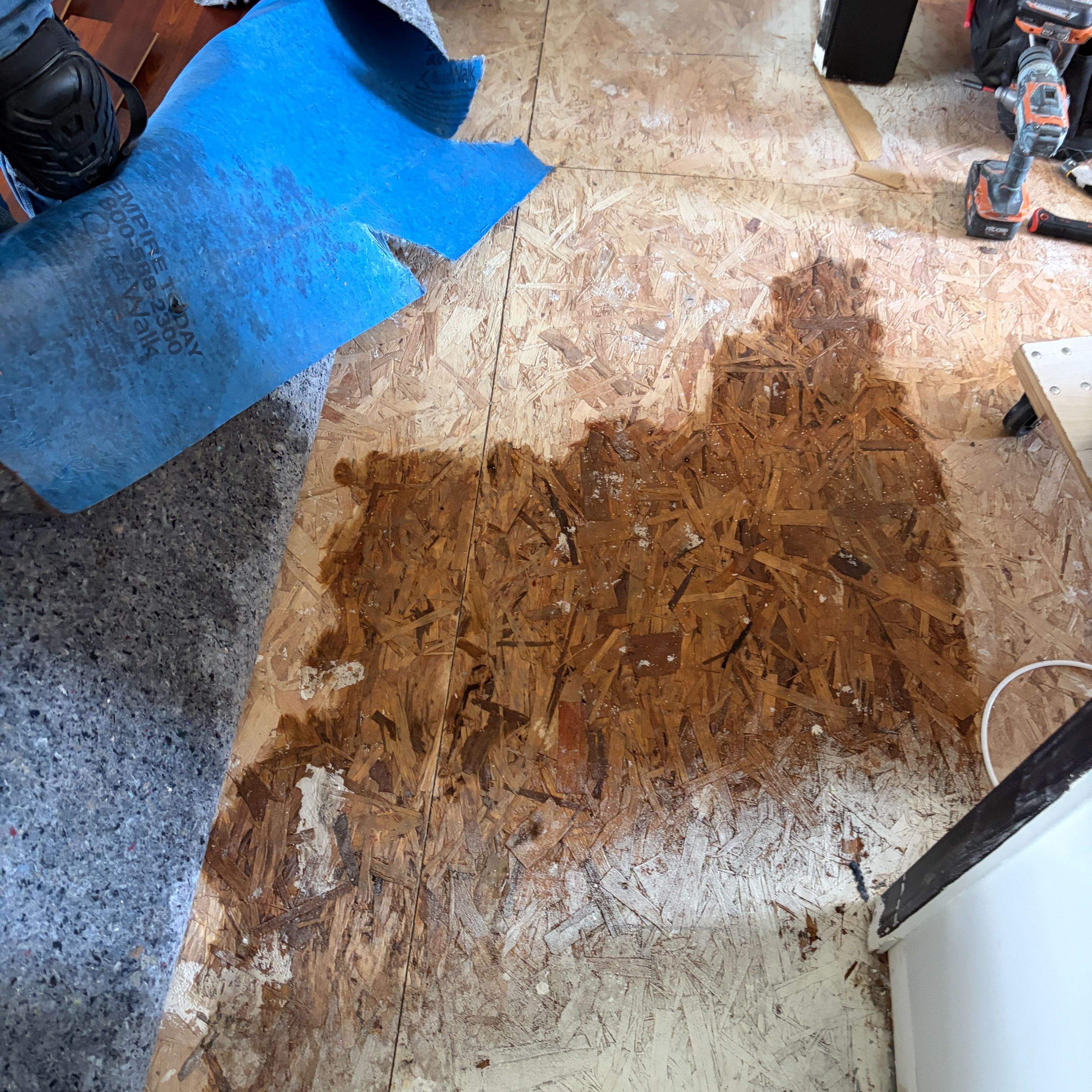
Step-by-Step Hidden Leak Detection Protocol
Work through each step in sequence. Each one narrows the leak source before any wall is opened.
Step 1: Shut Off and Isolate (0 to 5 minutes)
- Locate your main water shutoff valve. In most Brazil homes built after 1970, it sits within 3 feet of where the supply line enters the basement or crawlspace.
- Close the valve fully. A quarter-turn ball valve should rotate 90 degrees. A gate valve may require 6 to 8 full turns clockwise.
- Open the lowest cold-water tap in the home for 60 seconds to relieve line pressure.
- Note the time. This is your baseline for the meter test in Step 2.
- If the main valve is seized or weeps when operated, isolate at the curb stop with a meter key. Tag the valve for replacement once the active leak is resolved.
Step 2: Read the Water Meter (5 to 20 minutes)
- Locate the meter, typically in a pit near the curb or on an interior basement wall.
- Record the sweep hand position or the digital low-flow indicator. Most residential meters detect flow as low as 0.03 gallons per minute.
- Wait 15 minutes with the main shutoff closed and all fixtures off.
- Re-read the meter. Any movement at all confirms a leak on the supply side, inside a wall, slab, or yard line.
- If the meter is static, the leak is likely on a drain line, appliance discharge, or roof intrusion. Proceed to Step 4.
- For ambiguous results, run a 60-minute extended test. Slow weeps from a pinhole as small as 0.02 inches may not register within 15 minutes but will accumulate measurable flow over an hour.
Step 3: Thermal Imaging Scan (20 to 45 minutes)
- Use an infrared camera with a sensitivity of 0.1 degrees Celsius or better. Phone-attached thermal units work for surface scanning at distances under 6 feet.
- Set room temperature between 65 and 75 degrees Fahrenheit. Larger thermal differentials produce clearer images.
- Scan walls in a slow horizontal sweep, holding the camera 18 to 24 inches from the surface.
- Look for cool blue or purple plumes. Active supply leaks read 5 to 12 degrees cooler than surrounding drywall. Drain leaks may read warmer if the line carries hot wastewater.
- Mark every anomaly with painter's tape. Do not rely on memory.
- Scan ceilings directly below upstairs bathrooms and kitchens. Plume shape often points to the source: teardrop patterns track gravity flow, while circular halos suggest a stationary drip from above.
Step 4: Moisture Meter Verification (45 to 75 minutes)
- Use a pinless capacitance meter for initial scanning. Target readings on dry drywall: 0.3 to 0.5 on most scales, or under 16 percent on a wood-equivalent scale.
- Sweep each thermal anomaly. Readings above 0.7 (or 19 percent wood-equivalent) confirm active moisture.
- Switch to a pin meter for spot confirmation. Insert pins 1/4 inch into the drywall at the highest reading. Anything above 1 percent on a calibrated drywall scale is wet.
- Map the wet zone by marking every 6 inches in a grid pattern until readings return to baseline. This perimeter defines the affected area for your water damage restoration scope.
- Take a reference reading on a known-dry wall in the same room. This controls for ambient humidity, paint type, and wall assembly variations that can skew absolute numbers.
Step 5: Acoustic Listening for Pressurized Lines (75 to 90 minutes)
- Re-open the main shutoff valve.
- Close every fixture and appliance valve in the home.
- Place a mechanic's stethoscope or acoustic ground microphone against the wall at suspected leak points.
- Listen for a continuous hiss between 400 and 1500 Hz. That frequency band is characteristic of pinhole copper leaks and PEX fitting failures.
- Move along the suspected pipe run in 12-inch increments. The loudest point is typically within 8 to 14 inches of the actual breach.
- Conduct this step after dark or during the quietest hour of the day. HVAC blowers, refrigerator compressors, and exterior traffic mask leak signatures in the same frequency band.
Step 6: Inspection Hole Strategy (90 to 120 minutes)
- Choose the lowest-impact opening. A 4-inch by 4-inch square in a closet or behind furniture is easier to patch than a hole in the middle of a hallway.
- Cut between studs, which are spaced 16 inches on center in most Brazil homes.
- Use a drywall saw set to a 1.25-inch depth. Going deeper risks nicking wires or supply lines.
- Inspect the cavity with a borescope or phone flashlight. Document with photos before any cleanup begins, since insurance carriers require pre-mitigation evidence.
- Scan with a stud finder in metal-detection mode before cutting. Copper supply lines, electrical conduit, and HVAC straps often run within the first inch of drywall backing.
Step 7: Classify the Water and Decide (120 minutes onward)
- Category 1: Clean supply water. Drying may be possible without removing materials if caught within 24 hours.
- Category 2: Gray water from dishwashers, washing machines, or condensate lines. Requires antimicrobial treatment. Review the dishwasher leak floor repair guide if that is your source.
- Category 3: Black water from sewage or long-standing contamination. Drywall, insulation, and porous materials must be removed. See our sewage cleanup protocol.
- If saturated drywall covers more than 2 square feet, or the wet zone extends into adjacent rooms, professional extraction and structural drying is the only path that meets IICRC S500 standards.
- Category 1 water that sits more than 48 hours promotes to Category 2 by default under S500. Track elapsed time from initial leak, not from discovery.
Step 8: Document for the Insurance Claim
- Photograph every moisture reading with the meter display visible.
- Save the thermal images with timestamps.
- Record the meter test results from Step 2 in writing.
- Note the discovery date. Most policies require notice within 14 to 30 days of discovery, not occurrence.
- Keep all damaged material on site until the adjuster inspects, unless contamination requires immediate removal.
- Create a written timeline of every step from shutoff to mitigation. Include serial numbers from the moisture meter and thermal camera, since adjusters increasingly request equipment calibration records.
Step 9: When to Call a Professional
- Meter movement persists after all isolation valves are closed. This suggests a slab leak or yard-line break that requires line-tracing equipment.
- Moisture readings exceed 25 percent wood-equivalent across more than 10 square feet. Cavity drying at that scale requires negative-pressure containment and dedicated dehumidification.
- Visible mold growth is present, or the wet area has been concealed for more than 72 hours.
- The leak source is behind tile, stone, or plaster substrates that cannot be reopened without specialty tools. Brazil Water Restoration maintains the inspection cameras and injection drying systems to handle these assemblies without full demolition.